
How to Secure a Condo Building Entrance in Chicago
Complete guide to securing condo building entrances in Chicago — video intercoms, access control, cameras, and door hardware for HOAs.
· Vidimost LLC
Every condo building in Chicago faces the same fundamental challenge: controlling who gets through the front door without making life miserable for residents, delivery drivers, and guests. After securing dozens of condo entrances across Chicago, here’s what actually works — and what doesn’t.
The Three Layers of Entrance Security
A properly secured condo entrance needs three systems working together:
- Video intercom — so residents can see and speak with visitors before granting access
- Access control — so residents can enter without keys using fobs, cards, or phones
- Security cameras — so you have a record of everyone who enters and exits
If any one of these layers is missing or failing, the others can’t fully compensate.
Video Intercom: The Front Line
The intercom is the first thing a visitor encounters. It needs to be intuitive enough that a first-time delivery driver can use it without calling the leasing office, and reliable enough that it works in January at -15°F.
What Matters in a Condo Intercom
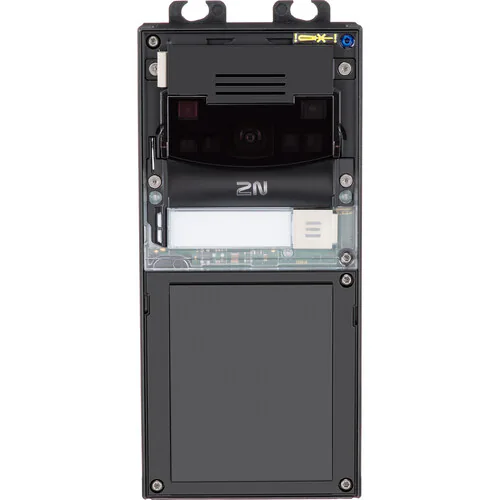
Directory search — Visitors need to find the right unit quickly. Alphabetical scrolling works for buildings under 50 units. For larger buildings, a search function (type the first few letters) is essential. 2N IP Verso and ButterflyMX both offer search-based directories.
Mobile app integration — Residents want to answer the intercom from their phone, see who’s at the door, and unlock remotely. This is non-negotiable for modern condo buildings. Every major intercom platform now supports this, but the quality of the mobile experience varies significantly.
Camera quality — The intercom’s built-in camera is often the only close-up identification shot you’ll get of a visitor. Wide-angle, backlit-corrected cameras with at least 2MP resolution are the minimum.
Weather resistance — Chicago winters destroy intercom panels that aren’t rated for extreme cold. The panel needs to operate reliably from -40°F to 130°F. Heated keypads prevent button freeze in winter.
Our Top Picks for Chicago Condos
For buildings under 100 units, the 2N IP Verso 2.0 is our most-deployed option — modular design, excellent build quality, and proven Chicago winter performance.
For buildings over 100 units or buildings that prioritize app-first experience, ButterflyMX offers a polished mobile-first platform with built-in delivery management. Available in 8” or 12” screens, in flush (recessed in stainless trim) or surface mount.
For tougher outdoor / vandal-prone entries — parking-garage gates, exposed service entries — the 2N IP Force 2.0 is the IP69 / IK10 single-piece sibling on the same SIP / IP platform. Sites without LAN at the gate can run the 2N LTE Verso with built-in cellular WAN.
For buildings that want facial recognition and touchless entry, Swiftlane delivers both intercom and access in a single panel.
For older Chicago apartment buildings still on legacy 3-wire / 4-wire wiring, Alpha remains the platform of choice — pair the AM492 lobby panel with Alpha IS204A (4-wire plastic) or IS407S (4-wire stainless-steel) in-unit stations.
Access Control: Moving Beyond Keys
Key-based entry systems are the single biggest security vulnerability in Chicago condos. Keys get copied, lost, and shared — and when a tenant moves out, rekeying the entire building costs thousands. Modern access control systems solve this by using credentials that can be instantly created, modified, and revoked.
Credential Options
| Type | Pros | Cons | Best For |
|---|---|---|---|
| Key fobs | Familiar, no phone needed, low cost | Can be shared, must be physically collected at move-out | Senior-heavy buildings, staff entry |
| Smart cards | Slim, professional, audit trail | Same sharing risk as fobs | Office-style condos, buildings with concierge |
| Mobile credentials | Can’t easily share, instant revoke, no physical item | Requires smartphone, Bluetooth/NFC | Modern buildings, tech-comfortable residents |
| PIN codes | No physical item needed | Can be shared, shoulder-surfing risk | Service entrances, temporary contractor access |
For most Chicago condos, we recommend a dual approach: mobile credentials as the primary method with key fobs available for residents who prefer them. This is supported by both Brivo (cloud) and Paxton (on-premise).
Controller Selection
The access control controller is the brain of the system. It connects to your door locks, intercoms, and management platform.
- Brivo ACS300 — Cloud-managed, 2-door controller. Ideal for buildings where the property manager or HOA board manages access remotely.
- Paxton Net2 Plus — On-premise, manages up to 64 doors. Ideal for large buildings with on-site management staff.
Camera Coverage at Entrances
Entrance cameras serve a different purpose than intercom cameras. While the intercom captures a face-on shot during the interaction, entrance security cameras provide continuous coverage of the entire entrance area — including people who bypass the intercom, tailgate behind residents, or approach from the side.
Recommended Entrance Camera Setup
- Overview camera — Wide-angle ceiling-mounted camera covering the full entrance vestibule. Position to capture the full body of everyone entering.
- Face capture camera — At face height (approximately 5’6” above floor), positioned so anyone passing through the door is captured head-on.
- Exterior camera — Covering the sidewalk approach to the entrance. Captures license plates of vehicles dropping off or picking up, and provides advance warning of approaching visitors.
Door Hardware: The Part Everyone Forgets
The best intercom and access control system in the world is useless if the door lock, closer, and frame aren’t right.
Electric strikes vs magnetic locks — Electric strikes integrate with the existing door latch and allow the door to be manually opened even during power failure (important for fire code). Mag locks hold with 1,200+ lbs of force but require a separate release for emergency exit. Chicago fire code generally prefers electric strikes for primary entrances.
Door closers — The closer must reliably shut and latch the door after every use. A door that doesn’t fully close and latch defeats the entire access control system. Inspect closers seasonally — Chicago’s temperature extremes affect closer hydraulics.
Request-to-exit (REX) — Motion sensors or push buttons that unlock the door from the inside. Required by fire code and essential for proper access control function.
Common Mistakes We See in Chicago Condos
- Installing access control without upgrading the door hardware — The electronic system works perfectly, but the door doesn’t close and latch reliably.
- No backup power — When power fails, everything goes offline. Every entrance system needs a UPS (battery backup) that provides at least 4 hours of operation.
- Ignoring the network — Modern intercoms and access panels are IP devices. They need reliable network connectivity with proper VLAN isolation.
- DIY installation by handyman — Door access systems involve electrical work, low-voltage wiring, and fire code compliance. Improper installation creates safety hazards and liability.
What This Costs for a Typical Chicago Condo
A complete entrance security upgrade for a typical Chicago condo (one main entrance, one garage entrance, and a service entrance) — including video intercom, access control for three doors, cameras, door hardware, and professional installation:
- Budget tier: $15,000 – $25,000
- Mid-range: $25,000 – $40,000
- Premium: $40,000 – $65,000
The primary cost difference is the intercom platform, camera quality, and whether you choose cloud or on-premise access control. Request a detailed proposal — we break down every line item.
Contact Vidimost at (872) 254-5015 for a free entrance security assessment.
Founder of Vidimost LLC — a Chicago-based security systems integrator specializing in commercial cameras, access control, video intercoms, and networking for condos, offices, and managed properties.